RESTAURANT TECH · 2026-11-08 · 5 min read
POS vs Cash Register: What Pakistani Restaurants Should Use
By Saqib Usman, Full Stack Developer
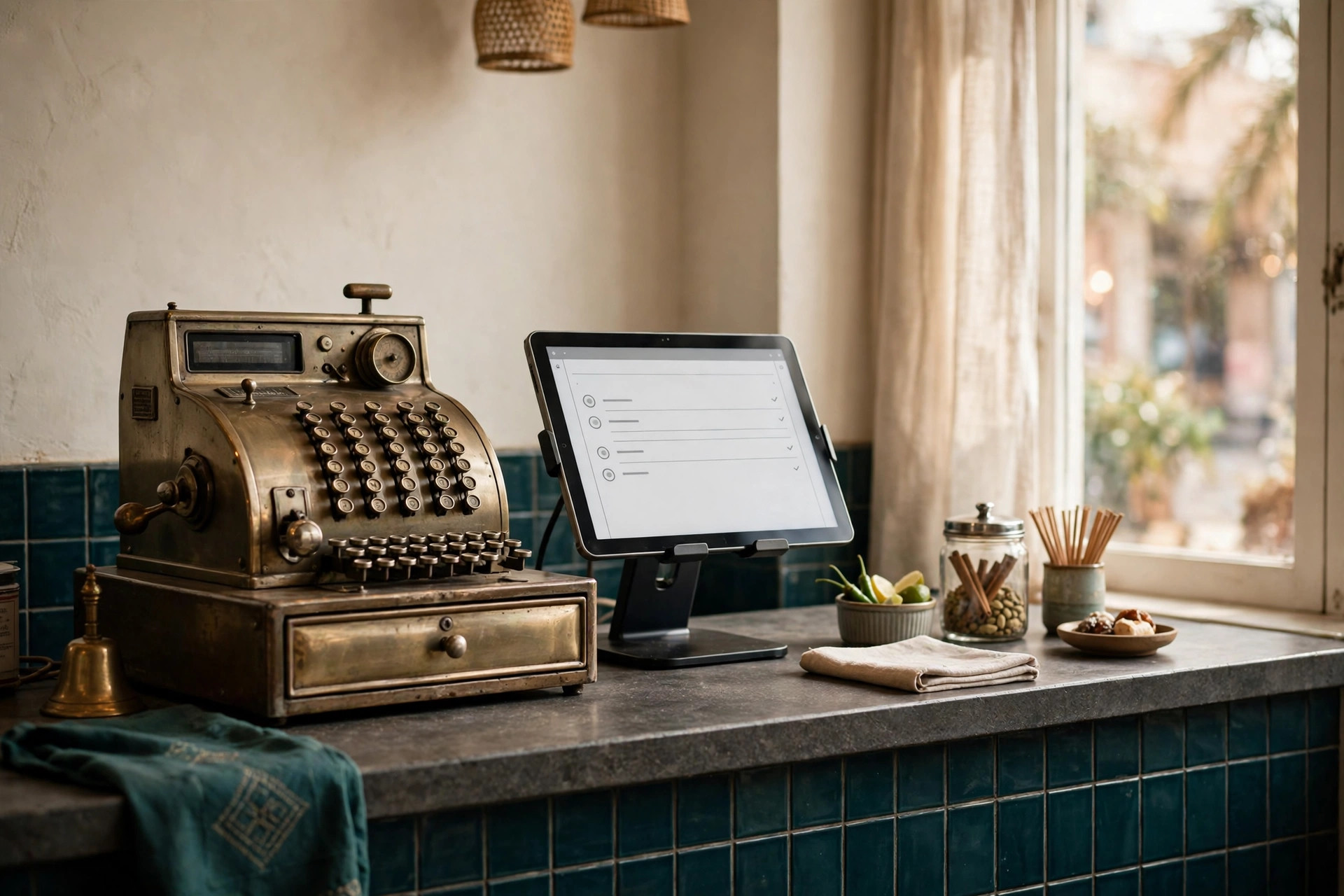
Walk into most small restaurants in Pakistan and you will still find a cash register at the counter. It has worked for decades. It opens, it closes, it prints a receipt, and at the end of the day the owner counts the cash. The question is not whether a cash register works. The question is whether it is enough for a restaurant that wants to grow.
What a cash register actually does
A cash register does one job well: it records cash sales and keeps the money in a drawer. It is cheap, simple, and anyone can learn it in five minutes. For a small dhaba or a takeaway counter with a short menu and mostly cash customers, that can be enough. But it stops there. It does not know what was ordered, who ordered it, or what is left in the kitchen.
Where the cash register starts costing you
The problems show up slowly. Orders are written on paper and shouted to the kitchen, so dishes get missed or cooked twice. The bill is typed by hand, so mistakes creep in. Stock is counted from memory, so a popular dish runs out on a Friday night. At the end of the month, the owner has a total sales figure and almost nothing else. Which dishes make money? Which hours are busiest? Which items should be removed from the menu? A cash register cannot answer any of that.
- Paper orders get lost, misread, or cooked in the wrong sequence
- Bills are calculated by hand, so undercharging and overcharging both happen
- Stock is guessed, not tracked, so popular items run out and slow items pile up
- There is no record of what sold, when it sold, or to whom
- Online orders, delivery and dine-in all run as separate, disconnected systems
What a POS system adds
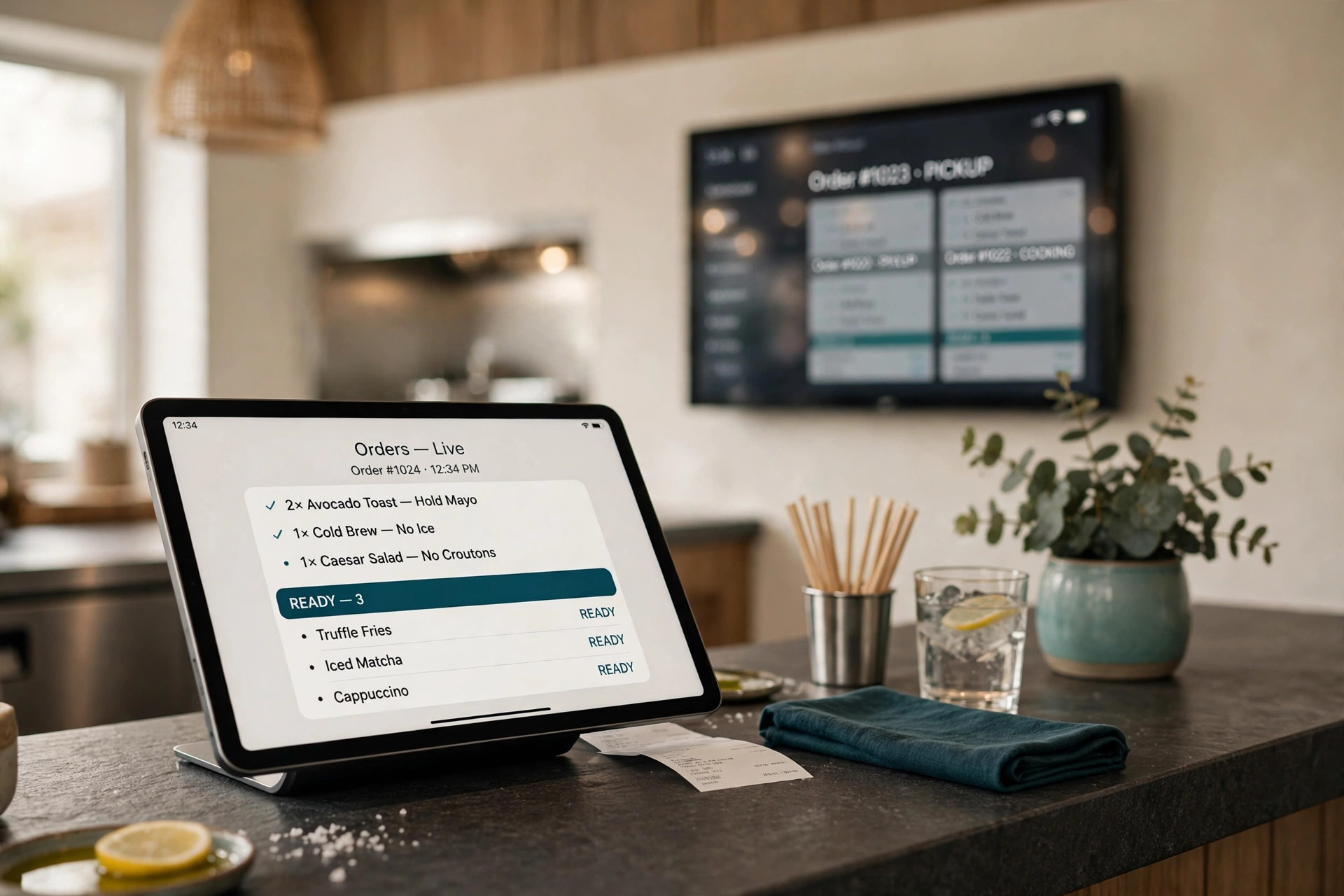
A modern POS is the cash register plus everything around it. When a waiter takes an order on a tablet, it appears on the kitchen display screen in the right order. The bill is generated from the same order, so it always matches. Stock updates with every sale, so the owner sees what is running low before it runs out. Payments work the way customers expect: cash, card, wallet, and split bills.
The bigger change is information. A POS tells you which dishes sell best, which ones cost more than they earn, which hours are busiest, and which customers come back. That is the information a restaurant owner needs to change the menu, plan staff, and run offers that actually work.
The cost question, honestly
A cash register is cheaper to buy. A POS costs more upfront, and there may be a small monthly fee. But the comparison is not honest if it stops at the price tag. A POS usually pays for itself through fewer mistakes alone: fewer wrong orders, fewer lost bills, less wasted stock. For a restaurant doing steady daily business, that saving shows up within months. The cash register is cheaper to buy and more expensive to run.
Who should keep the cash register
Not every business needs a POS. A tiny roadside stall with five items, one cook, and all cash sales does fine with a register. The moment a restaurant has more than a handful of tables, takes delivery orders, or wants to know what is actually selling, the register becomes the bottleneck. The rule is simple: if the owner spends more time fixing mistakes and counting stock than serving customers, it is time to move on.
How to make the switch without disruption
The fear with any new system is that it will slow the restaurant down while staff learn it. The way around that is to start small: billing, table orders, and a kitchen display first. Keep the cash register at the counter during the first week as a backup. Once the team is comfortable, add online ordering and then the extras like kiosks and loyalty offers. A good POS grows with the restaurant instead of forcing a big change on day one.
A cash register served Pakistani restaurants well for a long time. But restaurants now compete with online ordering, delivery apps, and customers who expect speed and accuracy. The register records what happened. A POS helps you run what happens next.
Keep reading.
Want something like this built?
I build restaurant systems, business websites and web platforms for clients. Tell me about your project and I will get back to you.
Start a project →